Three Clays, Many Colours
How Time and Kiln Fire Shape Yixing Zisha
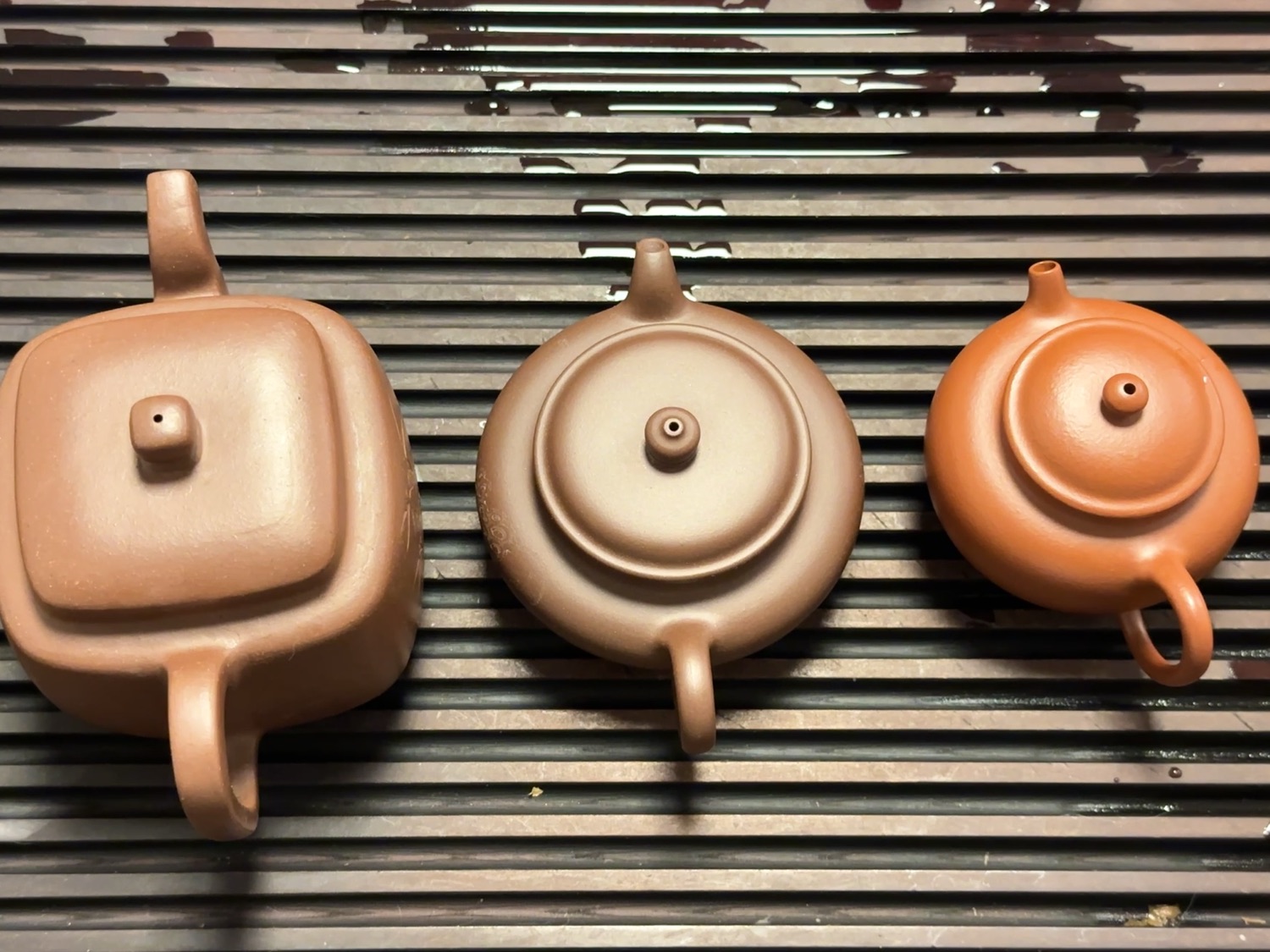
Three teapots sit side by side on a tea tray in Dingshu. On the left, Dicaoqing. In the centre, Lao Zini. On the right, Zhuni. Even before you pick one up, they seem to belong to three different seasons of the same mountain.
If you buy teaware for a tea room, or if you have spent years searching for one pot that feels right in your palm, this is usually the moment where curiosity begins. You hear the names—Dicaoqing, Lao Zini, Zhuni—and you expect three neat boxes, three fixed colours. Yet the closer you look at real Yixing Zisha clay, the more those neat boxes dissolve. One clay can carry a quiet plum-brown warmth; another holds a denser, iron-deep stillness; another answers the light with a taut, sunlit brightness. And even before you pick one up, a quieter question arrives: why does the same earth speak in so many voices?
Before the Workshop: Stone Waiting in the Weather
Before a teapot has a spout, a lid, or a silhouette, it is simply mineral material resting under open sky. In the workshop's Lao Zini records, raw clay ore is spread across the ground to weather and dry. Air, warmth, moisture and time all have their part in this slow preparation.
There is nothing theatrical about this stage, and nothing quick. Watching raw ore dry in the Dingshu sun makes it easier to understand why no two batches have quite the same story. You are working with layered mineral material that remembers where it was gathered, how long it rested, and how finely it was prepared before meeting a potter's hands.
Three Hands at One Table: Where Clay Meets the Maker
Back at the tea table, clay stops being geology and starts carrying people's names. In this clip, three vessels sit together—not as a checklist of clay types, but as a small record of relationships inside a Yixing studio.
There is a Lao Zini teapot, steady and unhurried in tone, the kind of clay many tea drinkers reach for when they want a vessel that feels grounded from the very first pour. Beside it sits a collaborative piece made with Gu Xinjun, a disciple of Master Fan Zefeng, using Factory No. 1 Lao Zini. And beside that stands an all-handmade Dicaoqing square teapot by Li Feng, father of studio founder Lin Lai, whose thirty-plus years of slab-built square ware give the clay crisp architectural edges without losing the softness of handwork.
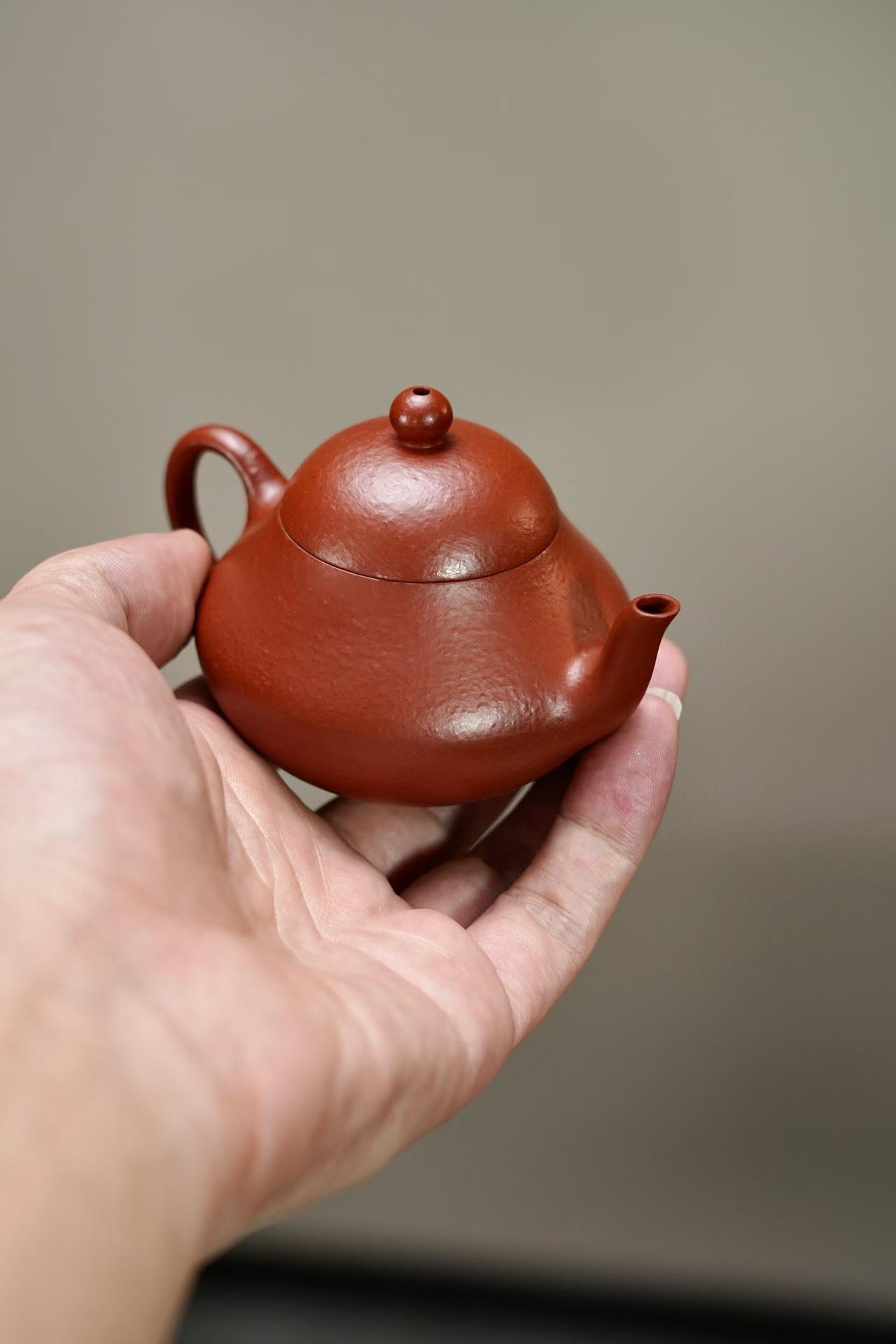
People often ask which of the three clays—Dicaoqing, Lao Zini, or Zhuni—is “the best.” On a real tea table, that question rarely lasts long. Dicaoqing, associated with the lower layers of the Zini deposit, often shows lively mineral texture within a composed purple-brown body. Lao Zini can feel rounder and deeper in colour, with a quiet, lived-in gravity. Zhuni tends towards a tighter, brighter surface and is often favoured by Gongfu tea drinkers who enjoy small pots and fragrant oolongs. None of them replaces the others; they simply invite different teas, different rooms, and different moods.
One Year of Tea: How a Vessel Learns to Glow
If there is one moment that makes people fall in love with Zisha for good, it is rarely a lecture on mineral composition. It is seeing three Dicaoqing pots made by the same hands, standing at three points in time.
All three Dicaoqing teapots in this clip were handmade by Li Feng. The first has just left the kiln—never brewed with, not even rinsed yet. Its surface is dry, honest, and matte, still holding the quiet breath of the firing. The second has been used for a few months; the surface looks slightly deeper, as if it has started listening to the tea. The third has spent roughly a year on a tea table. Under the light, it does not shine like glass or lacquer. Instead, it carries a soft, inward warmth—something closer to river-worn stone or old wood.
This is what tea drinkers mean when they speak of raising a pot. Every tea session, every gentle wipe of a tea towel and every turn in the palm becomes part of its daily life. The surface can grow warmer in character with use. You cannot rush that year into an afternoon. A new pot arrives at your shop or tea table unfinished in the best possible way—waiting for the person who will finish it with their own mornings.
Five Degrees Apart: Why the Same Clay Changes in the Kiln
Just when a buyer thinks they have learned to read Yixing clay by name, the kiln gently reminds everyone who is really in charge.
Look at the first pair in this video: two Benshan Qingduan Shipiao teapots made with the same named clay. One was fired in a gas kiln; the other in an electric kiln. Even side by side, their voices are different—the firing environment can affect how minerals and colour appear on the finished surface. Then look at the two Dicaoqing Xiaoyin teapots beside them. Both went into an electric kiln with two different firing settings, recorded in the workshop's notes as 2.3 and 2.4, a difference of roughly five degrees Celsius. Set side by side, the pieces reveal different tones, even though they share a clay name.
For an overseas tea merchant or collector, that small variation is part of the pleasure of looking closely. Two pots can share a clay name and still have their own character. Place them side by side, and each reveals a quiet signature of the hands and kiln that shaped it.
From Our Shelves in Dingshu to Your Tea Table
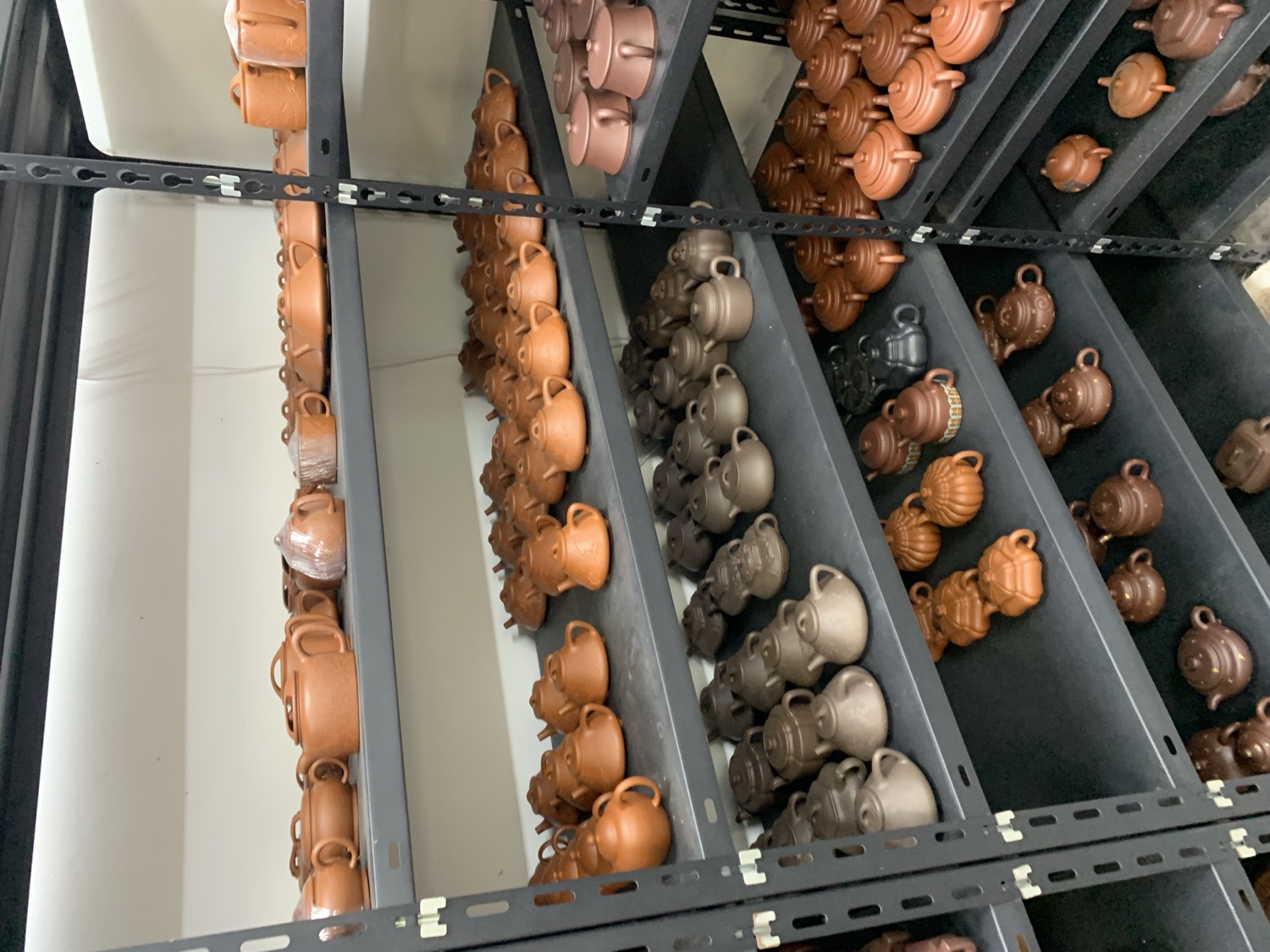
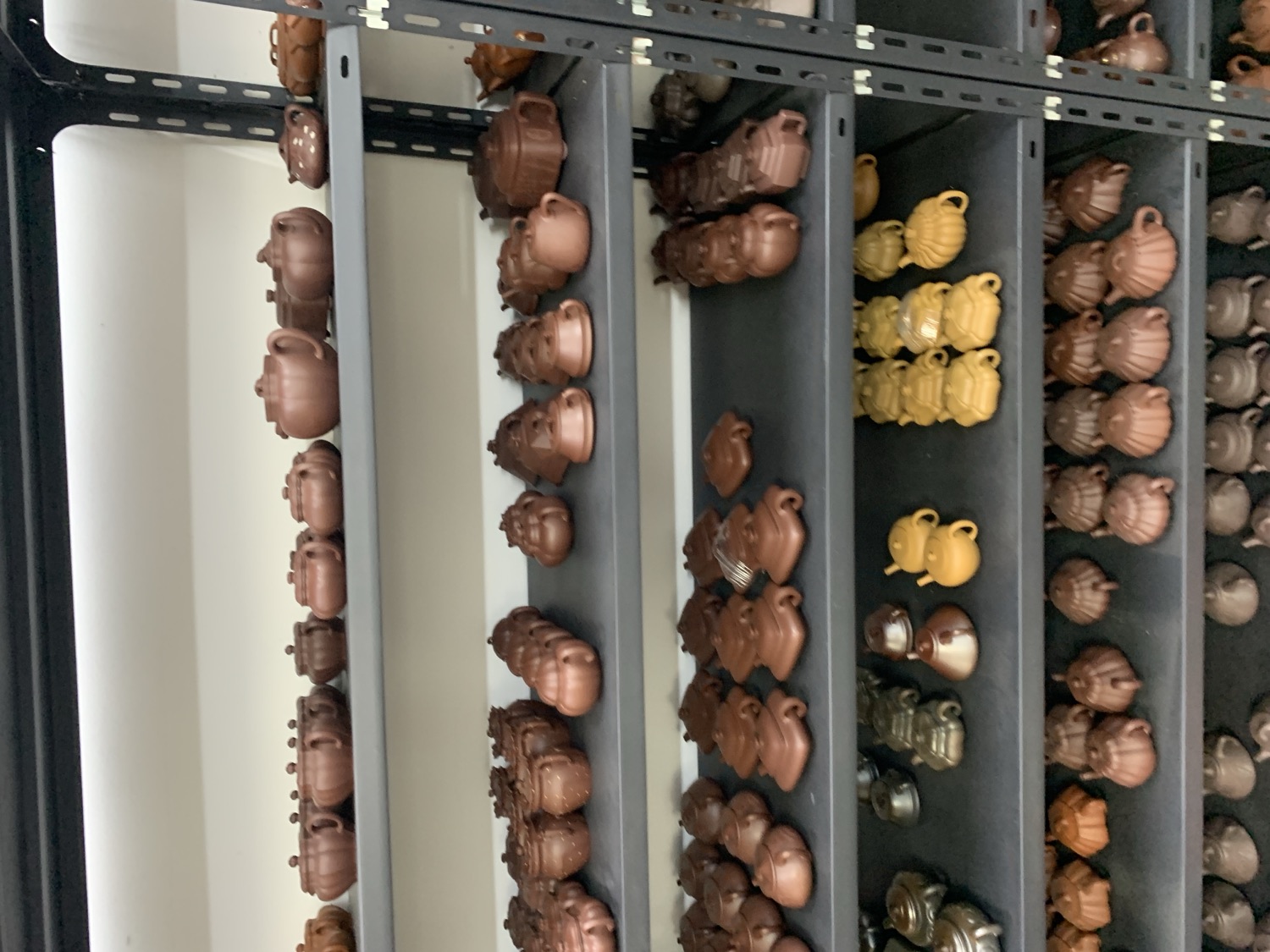
Walk past the storage shelves in our Dingshu workshop and you see that quiet variety all at once—row after row of pots resting between stages of work. As you look along the shelves, small differences catch your eye: a softer curve here, a deeper clay tone there, the quiet character of another firing. They show what keeps us curious: no two clays, hands, or firings tell the exact same story.
If you would like to look closer at the clays we work with, explore our Materials & Provenance notes. If you are curating teaware for a tea room, a shop shelf, or your own table, you can browse the current Trade Collection or get in touch with our studio to talk through which clays and forms fit your tea table best.
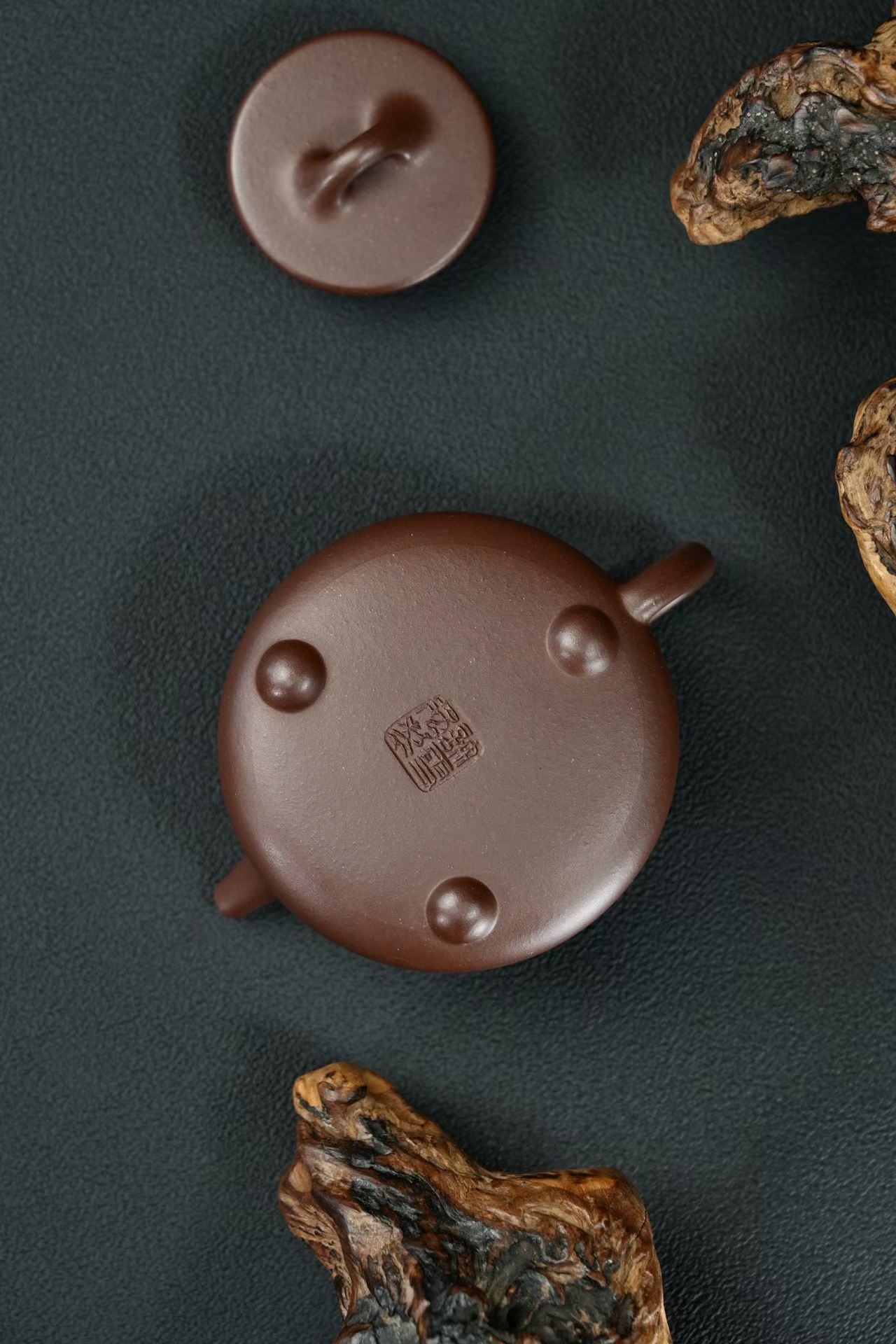
Find the clay and form that belong on your tea shelf.
Explore the real teapot versions, view the existing material records, and keep the pieces you love together for a private conversation.