How to Choose a Small Yixing Teapot
A Practical Capacity & Geometry Guide for Gongfu Tea Rooms
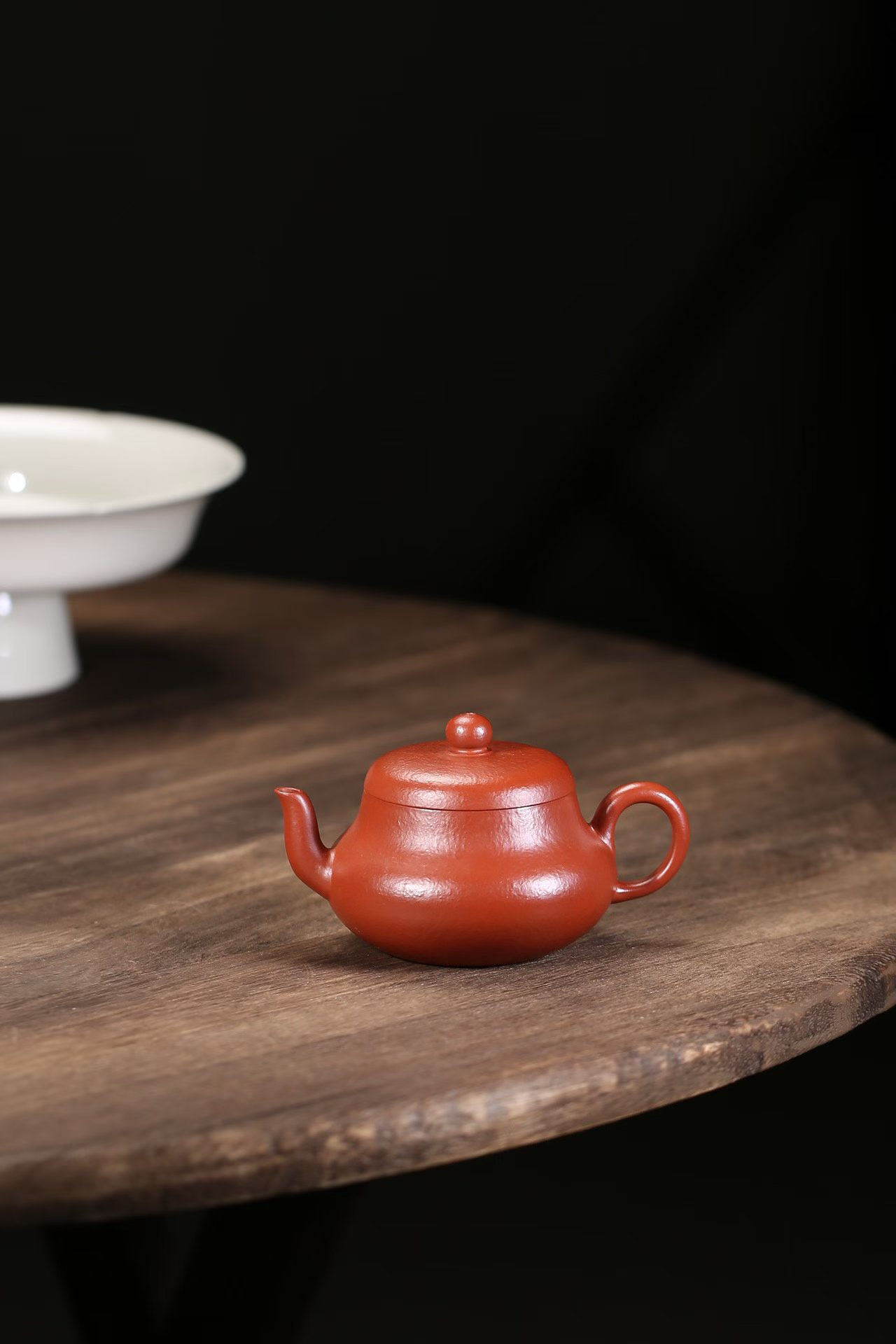 100ml · Classic Junde
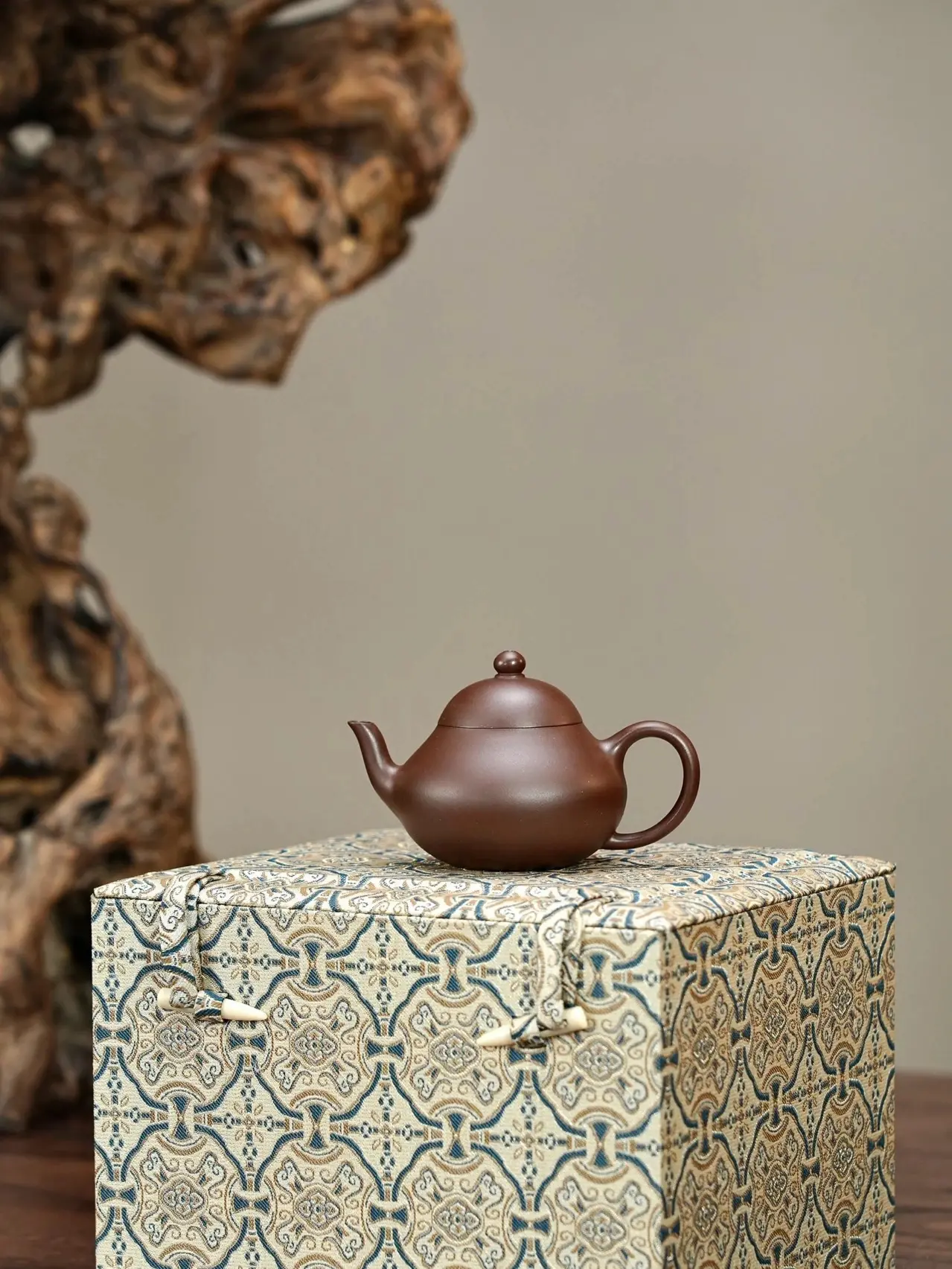 130ml · Xiao Pang Li
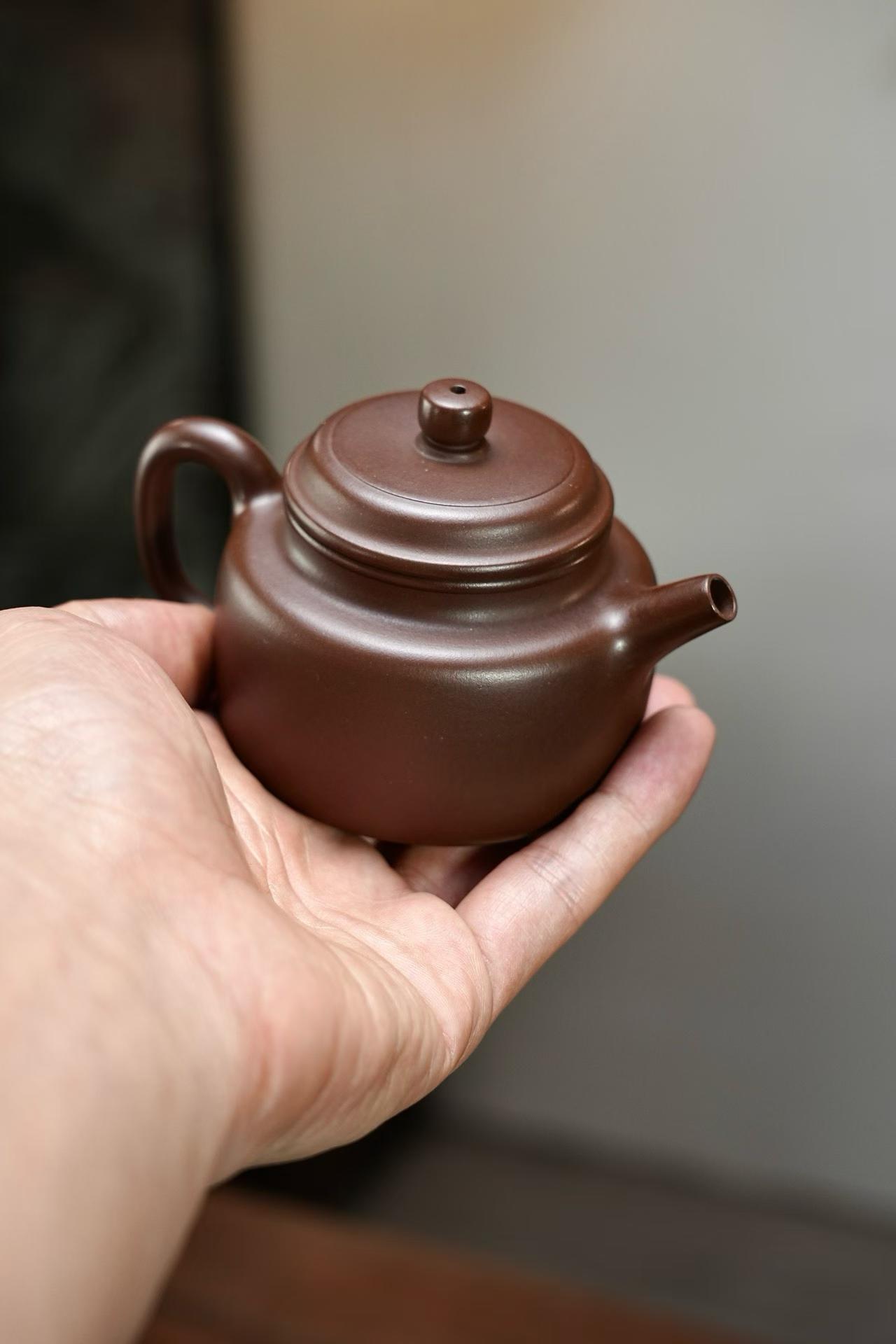 150ml · Classical Dezhong
The Myth of the “Standard” Teapot
For many Western tea retailers and tea practitioners transitioning from porcelain gaiwans to purple clay, the first sourcing question is almost always about size:
“What is the ideal capacity for an authentic Yixing teapot?”
In the West, commercial teapots routinely hold 400 to 800 milliliters for casual mug-style brewing. Beside them, an authentic 100ml or 130ml Gongfu teapot looks startlingly compact.
Yet in serious tea service, small volume is not a novelty—it is a functional choice.
When brewing high-grade whole-leaf teas, an oversized pot requires far more dry leaf to maintain the same brewing ratio. And when you are serving just one or two guests, a large pot can make it unnecessarily difficult to control the amount of water, the steeping time, and how quickly the liquor leaves the tea.
Anyone who has watched a beautiful Phoenix Dancong turn unpleasantly bitter after a distracted pour knows how much those few extra seconds can matter.
A small teapot gives you better control over your brewing rhythm, cup after cup, infusion after infusion.
This guide is written to help tea room owners and serious practitioners choose the right vessel based on actual table realities: guest count, leaf shape, and pouring speed.
The 100ml–160ml Spectrum: Choosing for Your Guest Count
In many Gongfu tea rooms, the most frequently used teapots are much smaller than newcomers expect.
Across our Standard Workshop Line, we find it useful to think about three practical capacity ranges.
100ml — The Solo Connoisseur
Example: The Classic Junde (XJ-W08, approximately 100ml).
Designed for solo tasting or two close friends.
With a small vessel, you can use a generous leaf dose without filling a large teapot with expensive tea. For those who enjoy concentrated, carefully timed infusions of Dancong or Rock Tea, this compact size offers a wonderfully direct brewing experience.
It also takes up very little space on a personal tea tray.
120ml–130ml — The Everyday Workhorse
Examples: The Chubby Xishi (XJ-W02, approximately 130ml), Xiao Pang Li (XJ-W04, 100ml in Zhuni or 130ml in Dicaoqing), and Elegant Siting (XJ-W05, approximately 130ml).
This is where many Gongfu practitioners find their everyday rhythm.
A pot around 130ml works comfortably for solo sessions or for sharing tea with two or three people using small tasting cups. The exact number of pours depends, of course, on cup size, the amount of leaf inside, and how much water you use.
For a tea room choosing its first versatile size, 130ml is a particularly sensible place to begin.
It is neither too small for sharing nor unnecessarily large for a quiet session alone.
150ml–160ml — More Guests, More Room
Examples: The Classical Dezhong (XJ-W06, approximately 150ml in Dicaoqing), Literati Fanggu (XJ-W09, approximately 150ml), and Standard Shuiping (XJ-W03, approximately 160ml in Dicaoqing).
When your tea table grows, a little more capacity makes service easier.
Larger vessels can be especially convenient when sharing several small cups or brewing teas with bulky, unbroken leaves.
For a busy tea room, the important question is not simply how many milliliters a pot holds.
It is how comfortably the pot fits your cups, your guests, and the pace of your service.
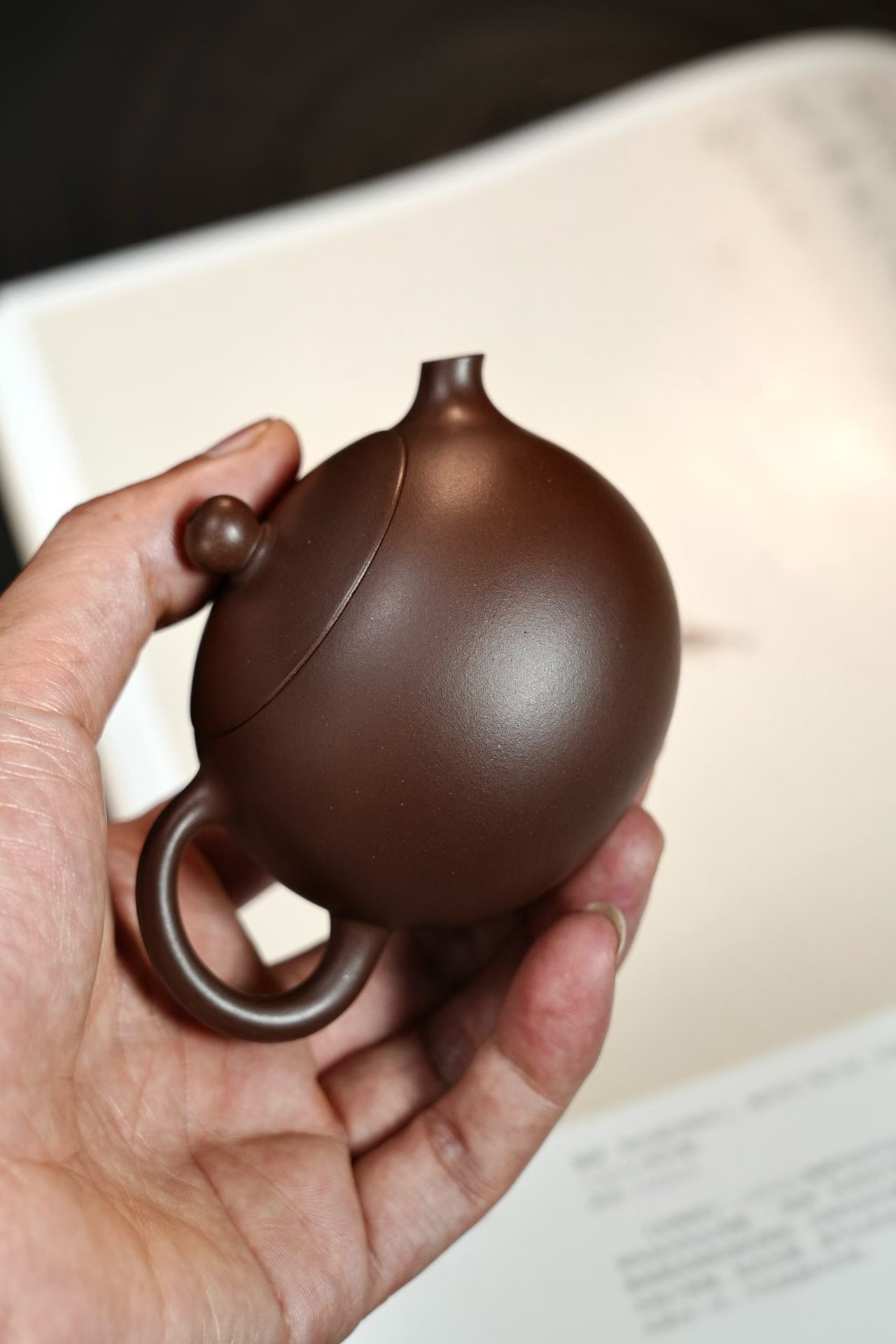
Chamber Architecture: Matching Pot Shapes to Dry Leaves
Capacity tells you how much tea you can pour.
Chamber shape tells you how comfortable the pot will be to use with the leaves you actually brew.
Dry tea leaves expand significantly once wet. Before choosing a teapot, picture how your favourite tea enters the pot, where the leaves settle, and how easily you can remove them afterward.
The Narrow-Neck Pear / Siting Form
Xiao Pang Li · Siting
A narrow opening above a fuller, rounded belly gives these forms their unmistakable silhouette.
Small, tightly rolled oolongs can be easy to drop through the opening. As the leaves gradually unfurl, the rounded lower chamber gives them space to settle.
There is something especially lovely about using a little pear-shaped pot for a quiet oolong session.
But if you regularly brew long, delicate Wuyi Rock Tea leaves, pay attention to the opening. Forcing brittle dry leaves through a narrow mouth is rarely enjoyable.
The Broad-Base Drum / Shipiao Form
Shipiao · Fanggu
These forms offer a different experience: a lower profile, a broad chamber, and a solid, grounded feel in the hand.
For tea drinkers who often use longer, twisted leaves, the opening and internal space may make loading and removing leaves easier.
A good tea pot should feel comfortable not only when you pour, but also when you prepare the leaves and clean up afterward.
That small detail matters enormously in a tea room that brews all day.
The Rounded Xishi Form
Chubby Xishi
The familiar rounded belly of a Xishi offers a generously curved interior.
It is a pleasing choice for tea drinkers who enjoy a compact pot with a fuller chamber, particularly when the leaf pieces fit comfortably through the opening.
The smooth internal shape is also straightforward to rinse after a session.
For many tea shops, this combination of familiar appearance and everyday practicality is exactly why the Xishi remains such an enduring favourite.
Pouring Speed: Why a Few Seconds Matter
In Gongfu brewing, pouring speed is not about showing off.
It is about controlling how long the water stays in contact with the leaves.
Imagine two small teapots on the same tea table. One empties in roughly seven seconds; the other takes fifteen.
Neither number alone tells you which pot is better. But when you are brewing a tea that needs careful timing, that difference becomes part of your brewing rhythm.
Anyone who has accidentally left a strong Phoenix Dancong steeping too long knows the disappointment of a beautiful fragrance giving way to unwanted bitterness.
When evaluating a small teapot for your tea bar, pay attention to three things:
The Pour
Does the water leave in a smooth, continuous stream? Can you empty the pot comfortably without awkward wrist movements?
A straight spout may offer a particularly direct pouring path, but the actual flow depends on the complete design of the pot, not the shape of the spout alone.
The Filter
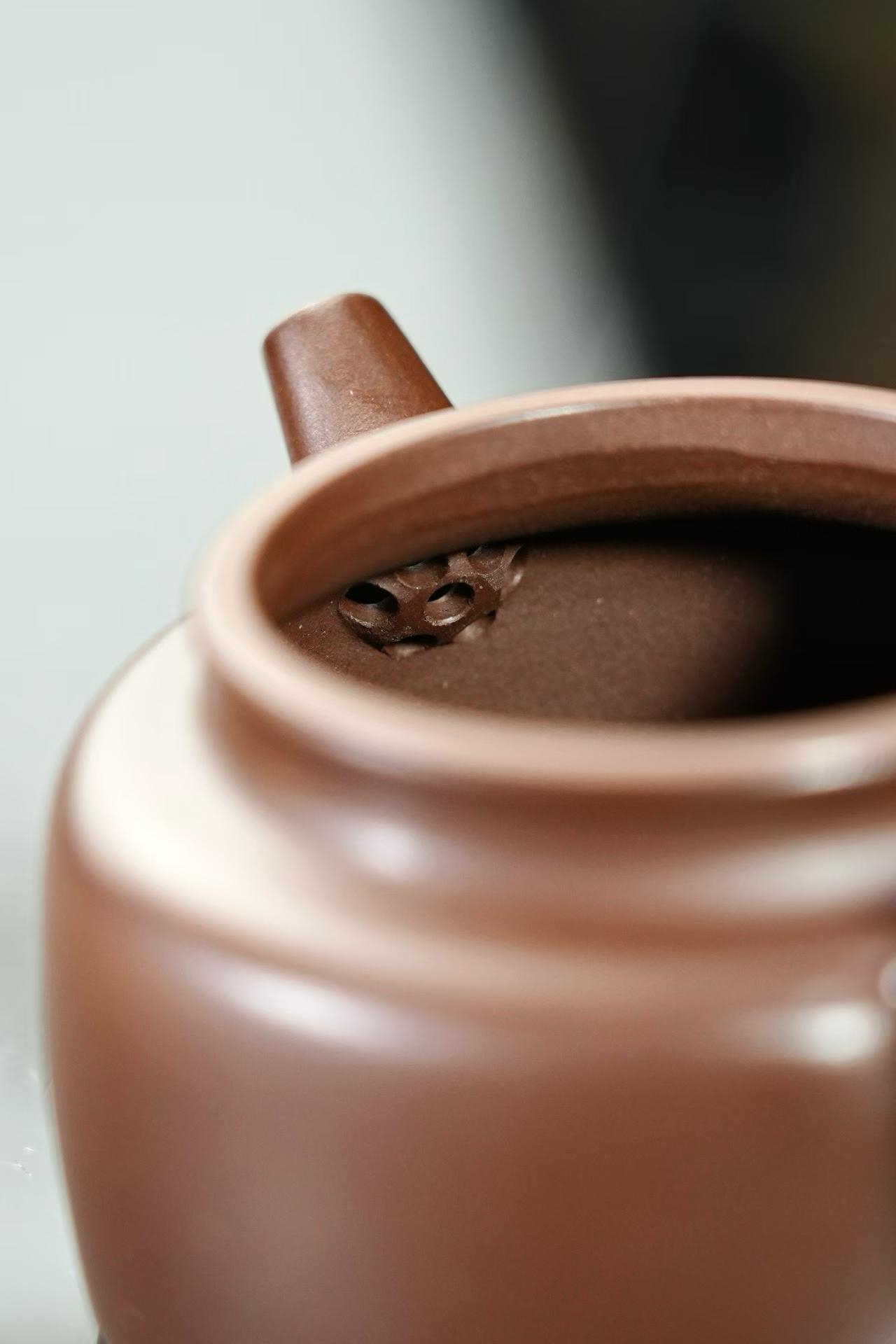
Look inside the pot.
Are the filter holes clean and unobstructed? Does the water flow freely when leaves are inside?
Different forms use different filter arrangements. The number of holes alone does not determine how well a teapot pours.
The Lid
Does the lid sit neatly and securely? Is it comfortable to hold in place while pouring?
Covering the small air hole may slow or stop the flow in some pots, but this is only one observation, not a universal proof of perfect airtightness.
At our workshop, these are the kinds of details we care about when checking how a teapot feels and pours at the bench.
And whenever possible, we would rather show you the actual pour than ask you to take our word for it.
The Shrinkage Note: Why Zhuni Can Be More Compact
When reviewing our Line Sheet, buyers sometimes notice that the same teapot shape has two different capacities.
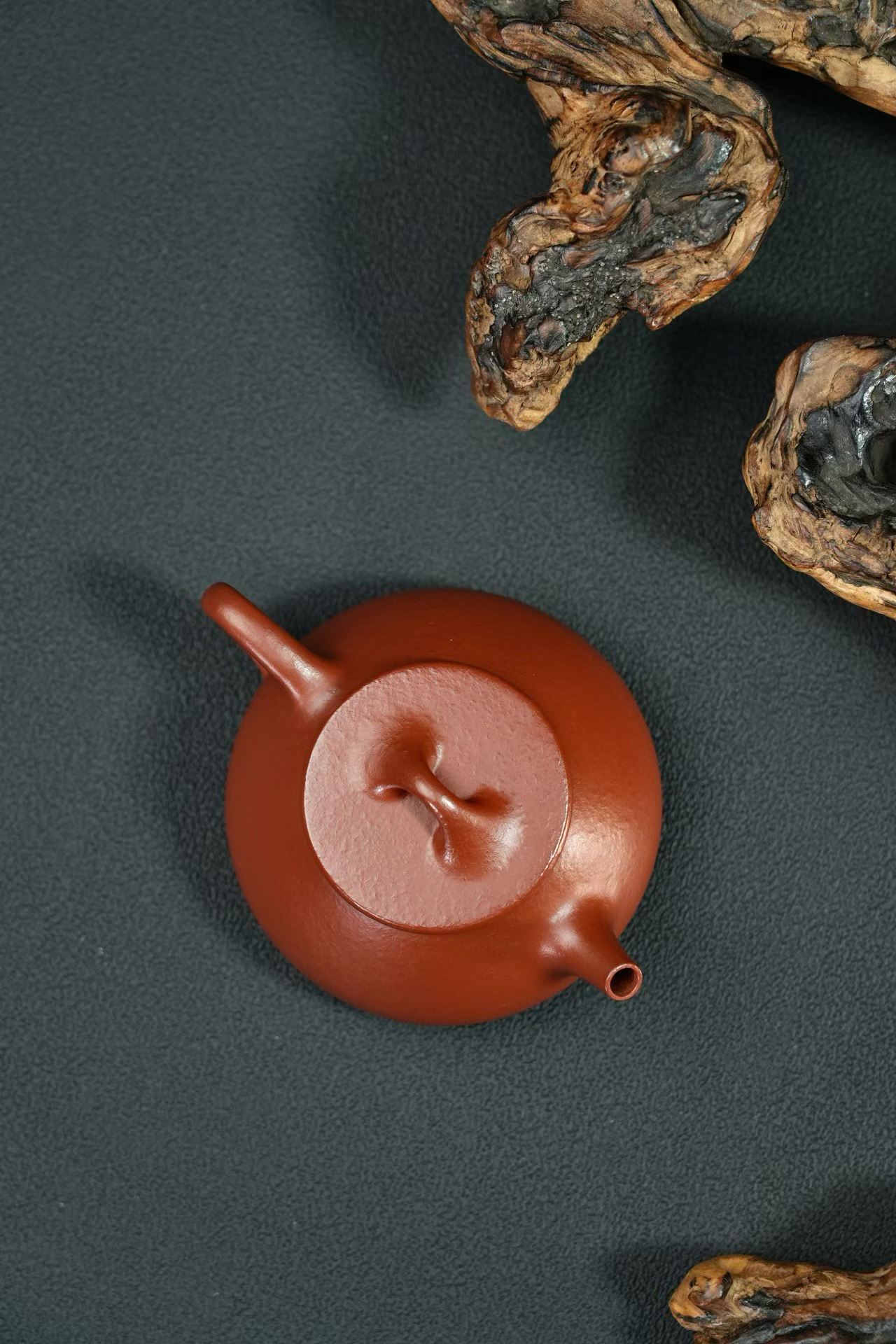
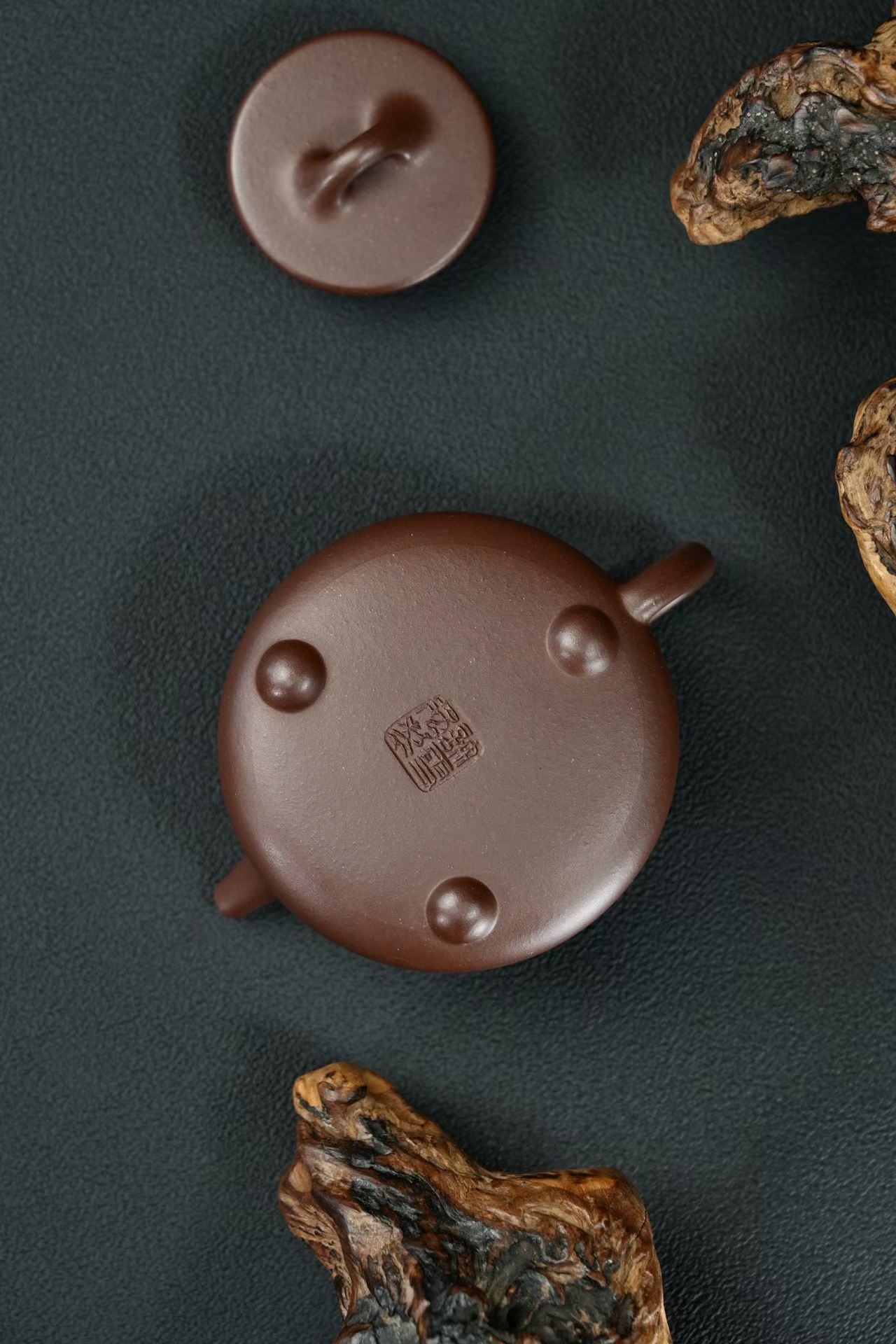
For example, our Classic Shipiao (XJ-W01) is listed at approximately 120ml in Xiaomeiyao Zhuni and 130ml in Lao Zini.
Is this a measuring mistake?
Not necessarily. Clay behaves differently in the kiln.
Fine-textured Zhuni bodies can undergo considerable shrinkage during firing, while Lao Zini and other purple clay bodies may respond differently because of their mineral composition, particle structure, forming process, and firing conditions.
That means two teapots made to a similar unfired size can emerge from the kiln with different finished dimensions.
It is one of the reasons we list capacities by the actual clay variant rather than assuming every version of a shape will hold exactly the same amount of water.
Natural variation is part of working with clay. What matters to the buyer is that the finished pot is measured and described accurately.
Building a Balanced 5-Piece Sourcing Flight
For an independent tea shop or tea room introducing authentic Yixing teapots to its shelves, stocking five identical pieces may not give your customers much room to explore.
A more useful opening selection offers different capacities, shapes, and clays.
Within our Standard Workshop Line, which supports mixed wholesale orders starting from five pieces, here is one practical combination worth considering.
Not a fixed set that every shop must buy—just a starting point for a tea room that wants to see how different forms feel in everyday service.
Classic Junde
100ml · Xiaomeiyao Zhuni. A beautifully compact pot for quiet solo sessions and carefully measured Gongfu brewing. A natural addition to the shelf of a shop that serves serious tea drinkers who enjoy small, personal brewing vessels.
See this teapot →
Xiao Pang Li
100ml Zhuni / 130ml Dicaoqing. With its upright pear silhouette and rounded belly, Xiao Pang Li brings a different personality to the tea table. Its two clay variants also invite a comparison of material and appearance within one familiar form.
See this teapot →
Chubby Xishi
Approximately 130ml · Lao Zini option. Soft curves, a generous rounded chamber, and a shape that feels immediately familiar. For a tea shop looking for an approachable classic with a strong visual identity, Xishi deserves a place in the conversation.
See this teapot →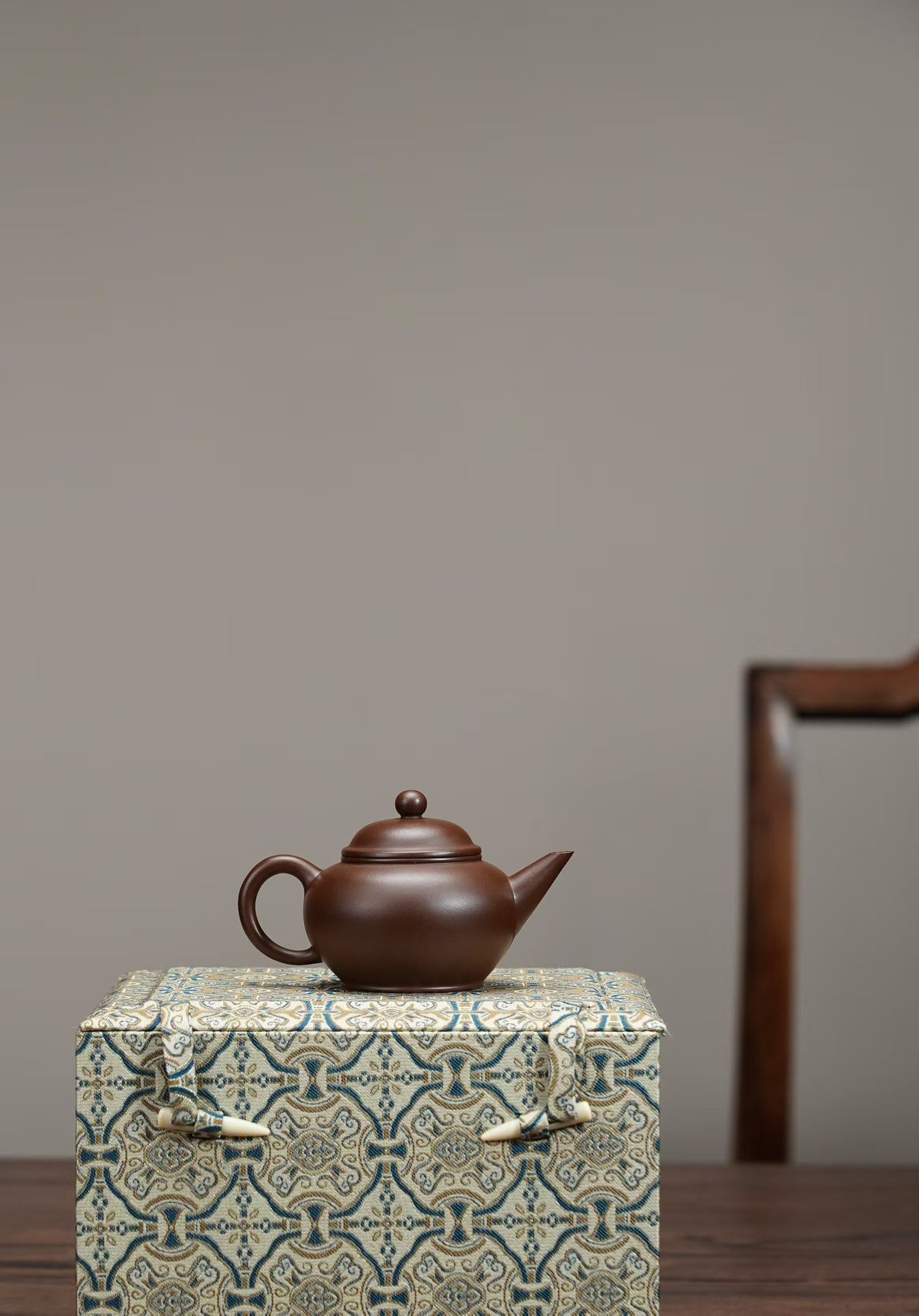
Standard Shuiping
130ml Zhuni / 160ml Dicaoqing. A classic Gongfu silhouette with a practical range of sizes. For shops interested in traditional Chaozhou tea service, it offers customers a chance to explore a form closely associated with that brewing culture.
See this teapot →
Classical Dezhong
Approximately 150ml in Dicaoqing. Upright, composed, and easy to recognise. Its more generous capacity makes it an attractive option for tea rooms that regularly share tea with several guests.
See this teapot →Put these five forms on the same tea table, and you have five different experiences to offer your customers.
A compact Junde for the quiet solo drinker. A little pear for someone who loves the elegance of that silhouette. A rounded Xishi for everyday familiarity. A traditional Shuiping. And an upright Dezhong for a more generous tea session.
The idea is not to convince every customer that one teapot is perfect for everything.
It is to give them a chance to discover the form that feels right in their hands.
We check the fit and pouring behaviour of our teapots at the workshop bench, and can share available clay and product details when you are putting together a shortlist.
If your shop is considering its first mixed order, tell us the teas your customers enjoy and how you usually serve them. We will be happy to help you compare the options.
From the Screen to the Tea Table
In Gongfu tea, a teapot is not simply a decorative object.
It is something you reach for every morning. Something that sits in your hand, receives your favourite leaves, and quietly becomes part of your daily tea ritual.
A 100ml pot may be exactly right for someone who loves a concentrated solo session. A 130ml Xishi may become the familiar favourite of a busy tea bar. And a 150ml Dezhong might be the one you reach for when friends come over.
There is no single perfect Yixing teapot for everyone.
There is simply the right pot for the way you enjoy tea.
If you would like to compare the current capacities, clay options, and photographs across our 21 teapot forms, you are welcome to explore our Line Sheet and Trade Collection.
And if a few forms catch your eye, you can add them to your Request List or tell us a little about your tea room through our Professional Sourcing page.
We would be happy to help you find the right starting point.
Warm regards from the workbench in Dingshu,
XUJIE Studio
Yixing, China
Find the teapot that feels right for your tea table.
See real product photographs and current clay options, build a shortlist, or tell our Dingshu workshop what you are looking for. All quotations remain private.